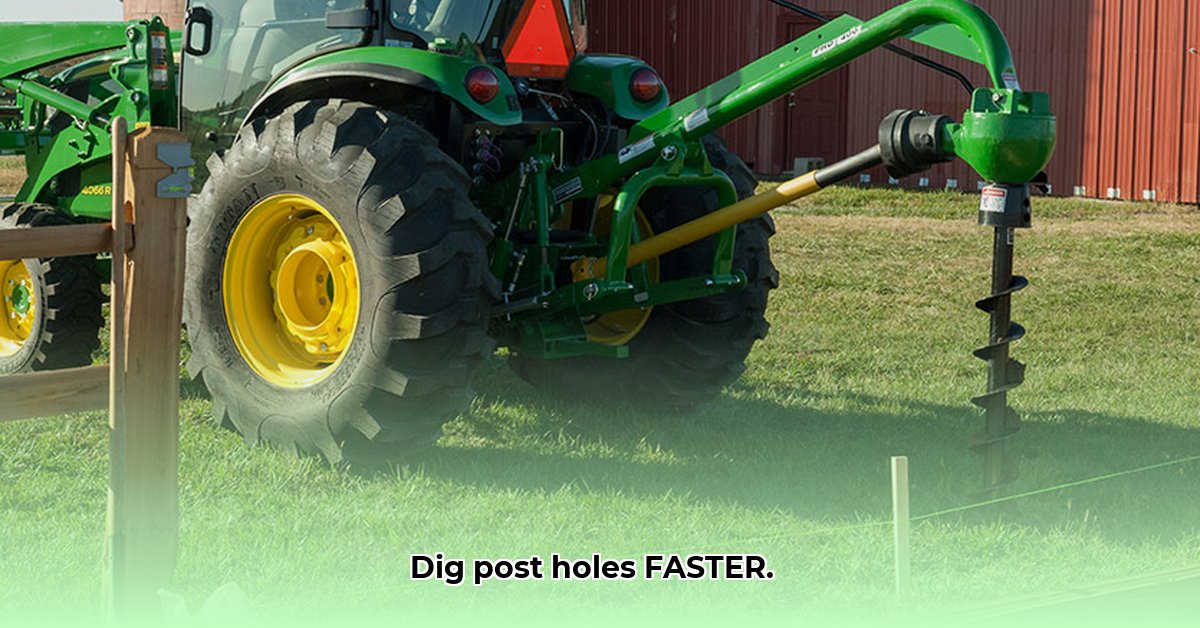
Knowing Your Tractor: The Foundation of Success
Before selecting a post hole auger attachment, understanding your tractor's capabilities is crucial. Consult your tractor's owner's manual to determine its horsepower (HP) and three-point hitch capacity. These figures directly impact the size and type of auger you can safely and efficiently use. Attempting to use an auger exceeding your tractor's capacity risks damaging the tractor and, more importantly, causing injury. Think of it like trying to lift a heavy weight with inadequate strength – the outcome is predictable and undesirable. For more in-depth information, check out this helpful guide: Tractor Post Hole Diggers.
Assessing the Job: Soil, Posts, and Your Vision
Next, analyze the specific project requirements. The soil type and the size and type of posts you are installing significantly influence the auger selection.
- Soil Type: Soft, sandy soil requires a different auger than tough, rocky clay. Harder soils necessitate augers with stronger, more durable cutting teeth.
- Post Size: Larger posts require larger-diameter augers. Consider the post's shape as well; round posts are generally easier to install than square ones.
- Project Scope: Visualizing the entire project helps determine the necessary auger length and overall capacity.
Auger Bit Selection: The Heart of the Matter
Auger bits vary in diameter, design, and length.
- Diameter: Select a diameter slightly larger than your posts to allow for easy insertion without compromising stability.
- Design: Auger designs vary based on soil type. Augers for rocky soil feature stronger teeth than those for softer ground.
- Length: Choose a length appropriate for your project's depth and your tractor's capacity. A longer bit may overload a smaller tractor.
"Selecting the correct auger bit is paramount for efficient operation and project success," says Dr. Emily Carter, Agricultural Engineering Professor at Cornell University.
Gearbox and Drive Shaft: The Power Players
The gearbox controls the auger's speed and torque, while the drive shaft transmits power from the tractor to the auger.
- Gearbox: High-speed gearboxes are suitable for easy soil conditions, while high-torque gearboxes handle tough soils.
- Drive Shaft: Choose a drive shaft with sufficient strength to prevent breakage. A weak drive shaft is a significant safety hazard.
Safety: Always Your Top Priority
Safety is paramount when operating any machinery. Prioritize safety precautions:
- Grounding: Always ground your tractor before use.
- Safe Distance: Maintain a safe distance from the rotating auger.
- Regular Maintenance: Regularly inspect and maintain the drive shaft and auger bit.
- Emergency Stops: Familiarize yourself with the emergency shut-off procedures.
Choosing Your Post Hole Auger: A Decision-Making Framework
The following table provides a simplified decision-making framework. Always consult manufacturer specifications.
| Tractor HP | Soil Type | Post Size/Type | Auger Bit Diameter (inches) | Gearbox Type | Drive Shaft Class |
|---|---|---|---|---|---|
| <30 HP | Sandy Loam | 4" Round | 6" | High-Speed | Class 2 |
| 30-50 HP | Clay | 6" Square | 8" | High-Torque | Class 3 |
| >50 HP | Rocky/Clay | 8" Round | 10" | High-Torque | Class 4 |
How to Attach and Operate Your Post Hole Auger
- Read the Manual: Carefully review your post hole digger's manual before starting.
- Secure Attachment: Attach the auger to your tractor's three-point hitch securely following manufacturer instructions.
- Engage PTO: Engage the PTO (Power Take-Off) slowly and gradually increase speed.
- Lower Auger: Lower the auger into the ground, maintaining consistent pressure.
- Disengage PTO: Once the hole reaches the desired depth, disengage the PTO and raise the auger carefully.
Is choosing the right post hole auger overwhelming? Remember to prioritize safety and consult your tractor's manual for optimal performance and longevity. Happy digging!